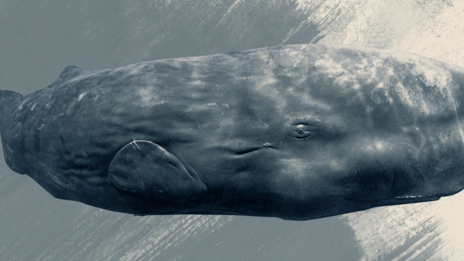
Thursday, June 8th is World Oceans Day, and to mark the occasion, Save our Seas and Shores PEI and the Holland College Green Machine will present SONIC SEA, the award-winning documentary film about the devastating impact of human-produced ocean noise on whales and other marine life.
SONIC SEA travels beneath the ocean’s surface to uncover the damaging consequences of increased ocean noise pollution and what can be done to stop it. Narrated by Academy Award-nominated actress Rachel McAdams and featuring interviews with marine ecologists, ocean life experts, and wildlife activists, including Grammy-Award winning musician, human rights and environmental activist Sting, SONIC SEA highlights how noise from a range of human-made sources has affected whales in recent years, including the mass stranding of whales around the planet. The film uncovers how better ship design, speed limits for large ships, quieter methods for underwater resource exploration, and exclusion zones for sonar training can work to reduce the noise in our oceans and stop the deaths of our ocean’s beloved creatures, as long as society has the political will to solve it. [discovery.com]
The film will be shown in Room 21C at Holland College, main campus, starting at 7 p.m.
Immediately following the screening, Dr Lindy Weilgart will be available to comment and answer questions. Lindy is an Adjunct Research Associate at Dalhousie University, and specialist in the effects of underwater noise pollution on cetaceans. She has served as invited noise expert for DFO Canada, U.S. Marine Mammal Commission, International Whaling Commission, NATO, European Parliament, Convention on Biodiversity, and the United Nations, and has published numerous peer-reviewed papers. She currently serves as Scientific Advisor for the International Ocean Noise Coalition.

 in Winter River is in the creation of Municipal Water Supply Area. And most troubling of all is Section 35(b), that gives the minister the authority to permit municipalities to exceed the limits on water extraction permitted by the Act, with neither reasons, nor time limits –perhaps this will be in the regulations. In my earlier brief I talked about the impacts of big interests, like municipalities and corporations which the government would be reluctant to regulate. This is clear example of this influence.
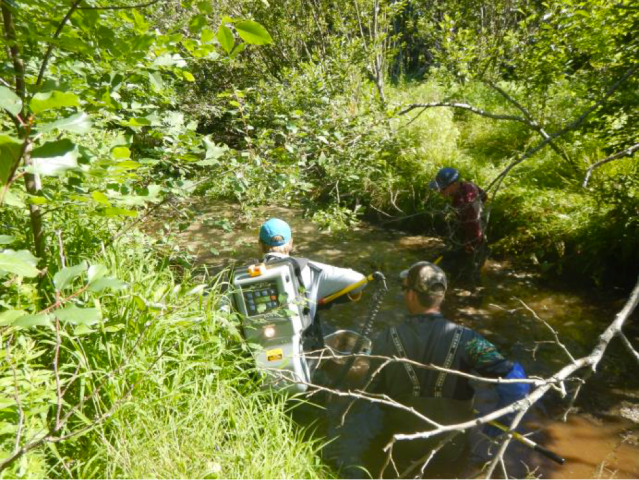 Sarah Wheatley and Cathy Corrigan of the Winter River/Tracadie Bay Watershed Group made some excellent points in their presentation, including the need to address the issue of moving water from one watershed to another:

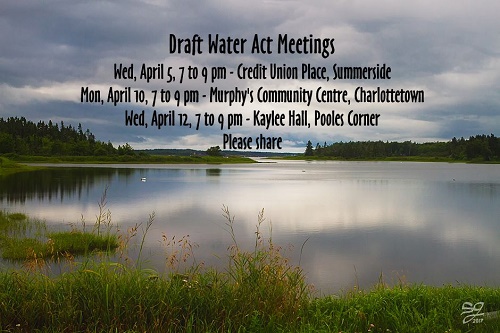
 Schedule of public meetings
 Coalition for the Protection of PEI Water