Some Thoughts about Water Governance

By Don Mazer

The process of developing a Water Act for PEI has engendered widespread and enthusiastic participation in public consultation. The Environmental Advisory Council and its supporting government structures have provided a wide range of opportunities for public input so that all citizens have had a chance to be heard. The EAC has been flexible and responsive to a range of concerns raised about transparency, scheduling and time constraints on the process. The results of this consultation process have been heartening –well attended sessions, and thoughtful and articulate presentations from a variety of groups and individuals across a number of sectors. The undertaking thus far, with its valuable public contributions regarding how we think about water, reflects the potential of a participatory democratic process to develop our fundamental Water Act and policies.

What happens next? – – The Participatory Model of Water Governance

It is essential to build on this productive and positive experience in the steps to come. First, ongoing and meaningful public involvement is needed in the development of the new Water Act and policies. Second, we believe that the Act and policies should be grounded in more collaborative approaches to water governance.

These suggestions will extend the open spirit of the consultations so far, and also reflect developing trends toward more participatory approaches to water governance.

The Dublin Statement on Water and Sustainable Development (1992) reflects the origins of such an approach. “Water development and management should be based on a participatory approach, involving users, planners and policy-makers at all levels.” Decisions are taken at the lowest appropriate level, with full public consultation and involvement in the planning and implementation of any activity that affects water.[1]

Several models of governance and decision making have emerged in recent years that reflect a more participatory approach: “decentralized collaborative watershed-based governance”, “delegated water governance partnerships”, “collaborative agencies” with government and citizens, and “watershed based governance”, among others. Common components of these models are multiple stakeholders, shared decision making and active public participation.

It is important to distinguish between the ideas of water “management” and water “governance”. Water management is often grounded in centralized decision making with the government as the principle stakeholder. By contrast, water governance reflects:

“the range of political, organizational and administrative processes through which interests are articulated, input is absorbed, decisions are made and implemented, and decision makers are held accountable in the development and management of water resources and delivery of water services.”[2]

POLIS, a BC research and sustainability institute, has done extensive work on the idea of “ecological governance” and applied this idea to watersheds.

“Ecological governance means embedding the environment in all levels of decision-making and action – from the personal to the global. It means thinking about our cities and communities, our forests and watersheds, our economic and political life within a new paradigm that treats the environment not as an add-on or afterthought, but as all-encompassing and all pervasive.

“Ecological governance is thus about democracy and community. It is also about the natural world within which our communities exist and interact, and which sustains us.”[3]

It reflects the necessary shift in thought that can help us to address our issues with water more holistically and sustainably.

Applying the Participatory Model to Prince Edward Island’s Water Act

What we require at this point is a commitment to a participatory process of policy development to find ways of considering and incorporating such models of governance in the Water Act. We have indicated some worthwhile directions that might be pursued in developing such policy (additional ideas and examples are appended). We believe that it is essential to “widen the funnel” so that more of the concerned input of engaged citizens, reflected in the wide public participation in the consultations, can have a meaningful voice in discussing the range of options and formulating the emerging policy.

It is also important to recognize that whatever policy and governance structures we develop will be grounded in particular values and ethics. Whether we view water as an economic good, a human right and social good, a human and ecosystem right and socio-ecological good, or as a sector, our focus will have important implications. What are the goals and rationales? Who are the important “stakeholders” to represent? What approach to democracy? What model of governance? What strategies will be used in governance?

In an earlier presentation, we had suggested the idea of a Water Governance Board to the EAC. We think that some form of such a board is an excellent idea, and that it be based on the ideas discussed above: multiple stakeholders, shared decision making, active public participation. There are examples of boards in California and in parts of Europe.   In Canada, the Okanagan Basin Water Board and Ontario’s Conservation Authorities are illustrations of agencies that have incorporated ideas of collaborative governance.

But it seems premature at this point to discuss this in greater detail, since the work of a policy development group will undoubtedly research and develop the range of possible structural options. Certainly, whatever board or structure that emerges must be characterized by accountability and transparency.

Any models of governance must have an important role for watersheds. POLIS and others have provided some excellent studies and examples of how this can be done. There can be a broad range of decisions that can be in the hands of watersheds while government retains its important regulatory and enforcement responsibilities.

What is most essential now, however, is to have a policy development group that would itself reflect the essential ideas of governance, that would provide a format where a broad range of ideas are articulated and negotiated in the development of policy and structures. Once again, we require multiple stakeholders, shared decision making and active public participation

As we’ve indicated in earlier presentations, we feel that the key goal of the Water Act needs to be the restoration and preservation of healthy aquatic ecosystems. It is imperative that we recognize that water is a right for both humans and ecosystems. In other countries such as Ecuador, nature (Pachamama) has rights embedded in its constitution, and parties can be sued on behalf of Pachamama if they infringe on these rights. So when we think about our suggestions for a policy development group, our primary concern is that people who see the primacy of such rights be present at the table who could “speak for nature”. In that group we would include representatives from the Coalition, from watershed groups, from First Nations, and from the water and watershed scientific community. Certainly there are other “stakeholders”– government officials and policy developers, those whose livelihood is intimately connected with water, and others who will also be included. A shared commitment to such ecological goals is essential in all members of such a group in developing our policies about water and its governance.

The Water Act consultations have been an important step in public participation. We now encourage the EAC to take the next bold steps to continue this process to reflect emerging forms of participatory water governance. First, by including engaged citizens committed to the health of ecosystems to be members of the policy development group that develops the Act, and then to develop collaborative structures of governance, like Water Boards, that will carry forth this work.

Further notes, information and resources

 On the importance of governance: “Where government is often about creating one policy, one organisational structure (often a bureaucraticone) and one order, governance is more about understanding the complex interactions between a variety of governments and other organisations active in a joint domain. Governance is about more: a combined and intertwined set of ambitions, goals and future challenges, a joint mutual dependent set of organisations beyond the public private boundaries, and a set of sub processes creating a more or less unmanageable water governance process system.” (Teisman et al., 2009; Flood, 1999)

Governance capacities will increase when a governance network does not only cater to the vested interests that have historically shaped existing governance structures, but also admit entrance of new interests into the water-related policies and management.

 On a participatory model of governance: Delegated water governance partnerships often involve:

  • delegation by government (or the relevant authority) of water governance to a lower scale;
  • greater involvement of a wide variety of non-state actors;
  • the use of a hydrographic boundary, such as the watershed, rather than political boundaries
  • collaborative decision-making processes, often emphasizing consensus and trust-building;
  • science-based decision-making, often requiring extensive fact-finding.

Various aspects of delegated governance have been incorporated into earlier water management initiatives (such as watershed based agencies like the Tennessee Valley Authority). Perhaps the most novel aspects of delegated water governance partnerships are the involvement of a large number of stakeholders representing diverse interests who treat each other more or less as equals, and the principle that decision-making should not be left solely to government experts.

Guiding Principles for a New Model of Governance

The Blueprint is informed by six critical watershed governance principles. These principles inform the proposed institutional architecture, which will be needed to implement this comprehensive vision for watershed governance.

The guiding principles are:

  1. Water for Nature
  2. Whole-Systems Approaches
  3. Transparency and Engagement of Affected Parties
  4. Subsidiarity and Clear Roles for Decision-Making
  5. Sustainable Financing and Capacity
  6. Accountability and Independent Oversight

The central premise of this Blueprint is to fundamentally change the scale at which critical decisions impacting watersheds are made and to develop a clear role for watershed entities (WEs) in formal decision-making. Wes would be community-based institutions that operate at a watershed scale to provide a nexus for integrating whole-system thinking with local ecological, economic, and social requirements. The governance functions and core activities envisioned for WEs are described in detail (Table 2), including a discussion of their principal roles and responsibilities in watershed visioning and planning; monitoring and reporting on local conditions; integrating mandates across levels of government; reducing and resolving conflicts; and education and building awareness.

Two critical features characterize WEs. First, there must be a framework that allows for a flexible spectrum of organizational structures that is adaptable to fit local circumstances. Second, WEs should be enabled—not required. Agreement among key stakeholders and rights holders, including First Nations and government, would be needed to catalyze the creation of a local WE. WEs would be specifically designed with attention to building accountability mechanisms and would be financially sustainable, allowing them to develop the necessary local legitimacy to advise and, ultimately, make decisions governing the ecological, social, and economic health of their waters.

On ecosystem/watershed management: There is a long-standing debate about what’s called ecosystem management and ecosystem-based management. It offers a great metaphor: the idea of ecosystem management is that you have a bunch of people working in the government who manage the ecosystem. They say “we need forests here, that’s the most important thing for us. We’re going to try to fit in recreation. We’ll worry about water (sort of) and the people (sort of) – but we will manage it according to our values.” Compare this with ecosystem-based management, which turns this around and says that whatever happens in the ecosystem, must be done in ways that allow that ecosystem to continue to flourish. The management must be based in the ecosystem.

On ecological governance: How do we structure governance systems so that we are accountable to the world? How do we structure the institutions that we create so they can fulfill the nature of the world? If a human is defined in one way, what does it take in our structures to allow the human to flourish? Or the rest of the world – other peoples, other forms of life, whether it’s fish or the forests or the air – how do we structure our governance systems to allow these to flourish and how do we reflect on that as a community?

References and resources:

http://www.polisproject.org/about

http://www.chance2sustain.eu/fileadmin/Website/Dokumente/Dokumente/Publications/Chance2Sustain._Literature_Review_No.4_Water_Governance_Key_Approaches_An_Analytical_Framework.pdf

http://www.obwb.ca/fileadmin/docs/fbc_watergovernance_final.pdf

http://www.unesco.nl/sites/default/files/dossier/water_governance.pdg_.pdf

[1] Dublin Statement from the United Nations Conference on Environment and Development, 1992 

http://www.wmo.int/pages/prog/hwrp/documents/english/icwedece.html

 [2] Delegating Water Governance: Issues and Challenges in the BC Context

Report for BC Water Governance Project prepared by UBC Program on Water Governance http://www.obwb.ca/fileadmin/docs/fbc_watergovernance_final.pdf

[3] POLIS: Project on Ecological Governance, research body situated in the Centre for Global Studies at the University of Victoria. http://www.polisproject.org/about
Health of P.E.I.’s aquatic ecosystems must be goal of Water Act

This OpEd was published in the Charlottetown Guardian December 14.

The final presentations to the Environmental Advisory Council (EAC) regarding the Water Act have been made.
The EAC will continue to accept comments and concerns until January 15. (See the government Water Act page here.)

The process has been open, transparent and participatory. The sessions were well-attended, and many people took the opportunity to ask questions or make comments during the open mic part of the evening.

It was impressive how many wonderful, detailed and well-researched presentations several groups and individuals made. Many of the people who worked on those presentations are volunteers. It just shows how important and meaningful these public sessions were, and how serious the issues regarding our water are for Islanders.

Members of the EAC have a daunting task ahead of them. At the final session, following presentations by Crop Life and Fertilizer Canada, it was mentioned that the EAC and the report must “find a balance.” What are we trying to balance? Is it economic growth with the health of the environment? The health of P.E.I.’s aquatic ecosystems must be the goal of the Water Act and our first and non-negotiable priority. If our environment continues to be degraded, it stands to reason the economy will also suffer. Management of the economy must be looked at through the lens of environmental security.

The precautionary principle was brought up in many of the presentations. This must be an enforceable principle, embedded in the act. In 1992, the United Nations adopted the following definition: “Where there may be threats of serious or irreversible damage, lack of full scientific certainty should not be used as a reason for postponing measures to prevent environmental degradation.” In 2001, the Supreme Court of Canada expanded this definition to include “human health.”

The precautionary approach recognizes that because there are limits to being able to determine and predict environmental impacts with scientific certainty, we must anticipate and prevent environmental degradation without waiting for proof that the environment will be impaired.

Many presenters also spoke about intergenerational equity, or making sure that we are protecting the environment for several generations. In what state will we leave this Island for our grandchildren and their grandchildren to come? This guiding principle should also be included in the legislation.

The Coalition for the Protection of P.E.I. Water strongly believes that citizen involvement should continue well beyond these consultations. We advocate a more democratic and inclusive process where citizens would have a collaborative role with government in the developing the Act itself, regulations, and in water governance and decision-making.

We have recommended such a “Water Board” to the EAC in our last presentation that would include a diverse group of citizens who have a primary commitment to ensuring and protecting the health of ecosystems. This board could include scientists and academics, First Nations, watershed groups, environmentalists, farmers, fishers, municipalities, and others. We will be submitting a more detailed proposal to the EAC for such a Water Governance Board in the New Year.

It is critical that we don’t take our water for granted and that we work to protect it now, and into the future.

Catherine O’Brien is the Chair of the Coalition for the Protection of P.E.I. Water.

Coalition Makes Second Presentation to the EAC

“We need to be guided by a bold vision for the future, and by a true commitment to sustainability. The key to this vision would be a transformation to sustainable agriculture as part of a sustainable economy. We need to ensure the production of healthy food while:

– restoring and preserving natural resources so that future generations can meet their needs

– improving the quality of the land (by increasing soil organic matter, and by reducing its pesticide and nitrate content)

– withdrawing no resources that cannot be replenished (e.g. fossil fuels)

– protecting the social and economic conditions of our farmers, and the health of our communities.”

Read the whole presentation here

DFO closes shellfishing due to contamination

Not a lot of information in this article but we can safely assume that the contamination came from pesticides running off from the recent heavy rains.

http://www.cbc.ca/news/canada/prince-edward-island/pei-shellfish-harvesting-restrictions-1.3336817?cmp=rss

The Department of Fisheries and Oceans has closed two areas of P.E.I. shoreline to shellfishing as a precautionary measure after fears of contamination from heavy rainfall.

On P.E.I.’s north shore, the closure runs east from Gillis Point to a point just east of Cavendish, and takes in the important shellfishing areas of both Malpeque Bay and New London Bay.

On the south side of the Island, the closure affects an area from the church in Mont Carmel east to just east of the Desable River.

The closure restricts harvesting of oysters, mussels, clams and any other bivalve mollusc in a three-kilometre band from shore.

The DFO has brought in similar closures in the past after heavy rains.


Groundwater Not as Renewable as Thought, Study Finds

By Andrew Nikiforuk, m.thetyee.ca

Groundwater, the globe’s most dependable water insurance system, is not as renewable as researchers once thought and its availability varies greatly around the world.
A new study published in the science journal Nature GeoScience found that just six per cent of the groundwater in the upper two kilometres of the Earth’s crust is actually renewed over a human lifetime.
As a consequence, the vast majority of groundwater now being consumed at a rapid rate by agriculture, human communities and the oil and gas industry took hundreds, thousands or even millions of years to collect in the earth. (Some groundwater in Canada is more than a billion years old.)
”It begs the question of what is renewable in terms of groundwater,” said hydrologist Tom Gleeson at the University of Victoria and one of the paper’s authors. ”When we talk about groundwater, it can be 100, 1,000 or 10,000 years old and it was all at some time precipitation. But it all comes down to timescale.”
Scientists classify groundwater, the water that supplies aquifers and wells, as ”young” or ”modern” if it has seeped and pooled in the earth for only 25 to 100 years. It is generally more readily available and of better quality than old or ancient groundwater and is more vulnerable to contamination.
The study, which used extensive computer modelling, mapped the extent of young groundwater around the world by tracking tritium, a radioactive tracer, in thousands of groundwater samples from around the world.
Tritium is a byproduct of atmospheric nuclear testing during the 1950s and 1960s. The element fell to the ground in rainwater and is now a standard measurement for mapping young groundwater.
According to Gleeson and his collaborators, all the world’s young groundwater, if pumped and poured over the planet, would make a three-metre-deep pool, roughly the height of a basketball net.
In contrast, the remaining 94 per cent of the world’s groundwater, which is largely brackish, if pumped from depths of two kilometres would create a 180-metre flood on Earth, about the height of the Calgary Tower.
The report concluded that ”groundwater replenished over a human lifetime of 25 to 100 years is a finite, limited resource with a spatially heterogeneous distribution dependent on geographic, geologic and hydrologic conditions.”
”The results are a call to better manage and protect the resource,” said Gleeson. ”They show where groundwater is renewable and where it is most vulnerable to contamination and climate change.” Not surprisingly, young or modern groundwater is the most susceptible to both.
Canadian monitoring lacks: expert
Groundwater supports a critical part of the Canadian economy.
Approximately 80 per cent of the rural population and 43 per cent of the nation’s agricultural productivity depend on groundwater. Groundwater also provides industry, including the water-intensive oil and gas sector, with 14 per cent of its water needs.
Yet federal researchers admit that they know relatively little about groundwater availability, quality and behaviour in Canada.
A 2011 report by the National Round Table on the Environment and the Economy, a federal agency closed by the Harper government, noted that information ”on groundwater supplies is largely absent and is needed because of its link to many of Canada’s surface water sources.”
To date, Natural Resources Canada has mapped 19 of the nation’s so-called ”key” 30 aquifers. It doesn’t expect to complete its mapping until 2025.
Meanwhile, mining projects such as hydraulic fracturing in northern British Columbia and bitumen mining in northern Albertan could contaminate extensive groundwater supplies with stray gas, salt water, bitumen or other hydrocarbons.
John Cherry, the nation’s leading expert on groundwater contamination, has repeatedly warned that provincial governments have failed to set up rigorous groundwater monitoring programs in regions being fracked by the oil and gas industry in Saskatchewan, Alberta and British Columbia.
”From my hydrogeological perspective, I view shale gas development as a big experiment for which we have minimal scientific basis for predicting the outcome or the impacts of stray gas on groundwater quality,” he said.
Recent studies have shown that the fracking industry can violate aquifers, cause minor earthquakes and aggravate the leakage of stray methane from aging oil and gas wells by rattling existing oil and gas infrastructure.
A recent Stanford study, for example, found that the fracking of oil and gas less than a mile from aquifers or the Earth’s surface now takes place across North America with few restrictions, posing increased risk for drinking water supplies.
”We Canadians are leaders in many areas of groundwater science, but we are at the bottom of the ranking of countries that use modern science in or for groundwater mapping and protection,” Cherry said.
World aquifers stressed: NASA
Earlier this year, NASA scientists reported that the human economy was rapidly mining nearly one-third of the world’s largest aquifers even though researchers know little about how much water remains in them.
The NASA study found that 13 of the planet’s 37 largest aquifers studied between 2003 and 2013 were being depleted while receiving little to no young water. These aquifers support two billion human beings with drinking water.
The scientists identified the world’s most stressed groundwater supply as the Arabian Aquifer System. It provides drinking water for places like Saudi Arabia and more than 60 million people.
Other dangerously stressed aquifers included the Indus Basin aquifer of northwestern India and Pakistan and the Murzuk-Djado Basin in northern Africa.
California’s Central Valley, which has been mined heavily by industrial agriculture and is suffering rapid depletion, was labeled ”highly stressed” as well.
Researchers now say the aquifer that supports much of North America’s food production ”lacks sufficient natural recharge to balance current use rates,” which has been exacerbated by an increased dependence on groundwater during the California drought. (California is the first state to pass sustainable groundwater management legislation, but it doesn’t go into effect until 2040.)
”The degree to which a society understands and protects its groundwater is a measure of the society’s commitment to taking care of the ‘public commons,’ or in other words, the commitment to environmental sustainability,” explained Cherry.
”This is because the problems that show up in groundwater take much longer than an electoral cycle or two. Therefore, if our present society behaves responsibly on this, the primary benefits are for our children and mostly our grandchildren. The Europeans sort of understand this, but we cowboys on this continent find the concept beyond our imagination.”

Water Act Consultations Schedule

The Water Act Consultations are winding down – here is the schedule for the next few weeks. In each case start time is 7:00 p.m.

Tuesday, Nov. 24th
Kensington Legion

Kensington North Watersheds Association
Kensington Water Management
Southwest River Nitrate Group
Margaret MacKay (individual)

Thursday, Nov. 26th
Elmsdale, Westisle Composite

Coalition for the Protection of PEI Water (#2)
PEI Federation of Agriculture
PEI Federation of Municipalities
Cascumpec Bay Watershed Association

Wednesday, Dec. 2nd
Cornwall Civic Centre

Cornwall and Area Watershed Group
PEI Potato Board
PEI Shellfishers Association
Ellen’s Creek Protection and Planning Committee

Monday, Dec. 7th
Farm Centre, Charlottetown

CropLife Canada
Fertilizer Canada
Darcie Lanthier (individual)
Sandy MacKay (individual)

Save Our Seas and Shores PEI Presents to EAC

UntitledEllie Reddin and Ian Forgeron, speaking on behalf of SOSS PEI made an excellent presentation with 3 strong recommendations:

Recommendation 1: Protection from the potential pollution of PEI water resulting from oil and gas exploration and drilling in the Gulf, including the discharge of deleterious substances.

Recommendation 2: Protection of fundamental right to clean, safe drinking water, and the protection of the health of aquatic systems as the primary goal of the Water Act.

Recommendation 3: Continuation of moratorium on High Capacity Wells for agricultural irrigation, and non-essential uses; as well as, increased regulations for for industrial and commercial purposes of High Capacity Wells and to phase out existing wells gradually to the extent possible.

Strong Recommendations from Winter River/Tracadie Bay Watershed Group

12002070_915755031830986_3432133490319790371_n

The Winter River/Tracadie Bay Watershed Association made a powerful presentation to the Environmental Advisory Council on November 4th.

One of their recommendations was to investigate methods to return some water to the Winter River to reduce the amount of “one way flow” of water to Charlottetown, at least during dry periods, to help recharge the aquifer. Read more here.


We Don’t Want Another Winter River: Lessons for the Water Act By Don Mazer

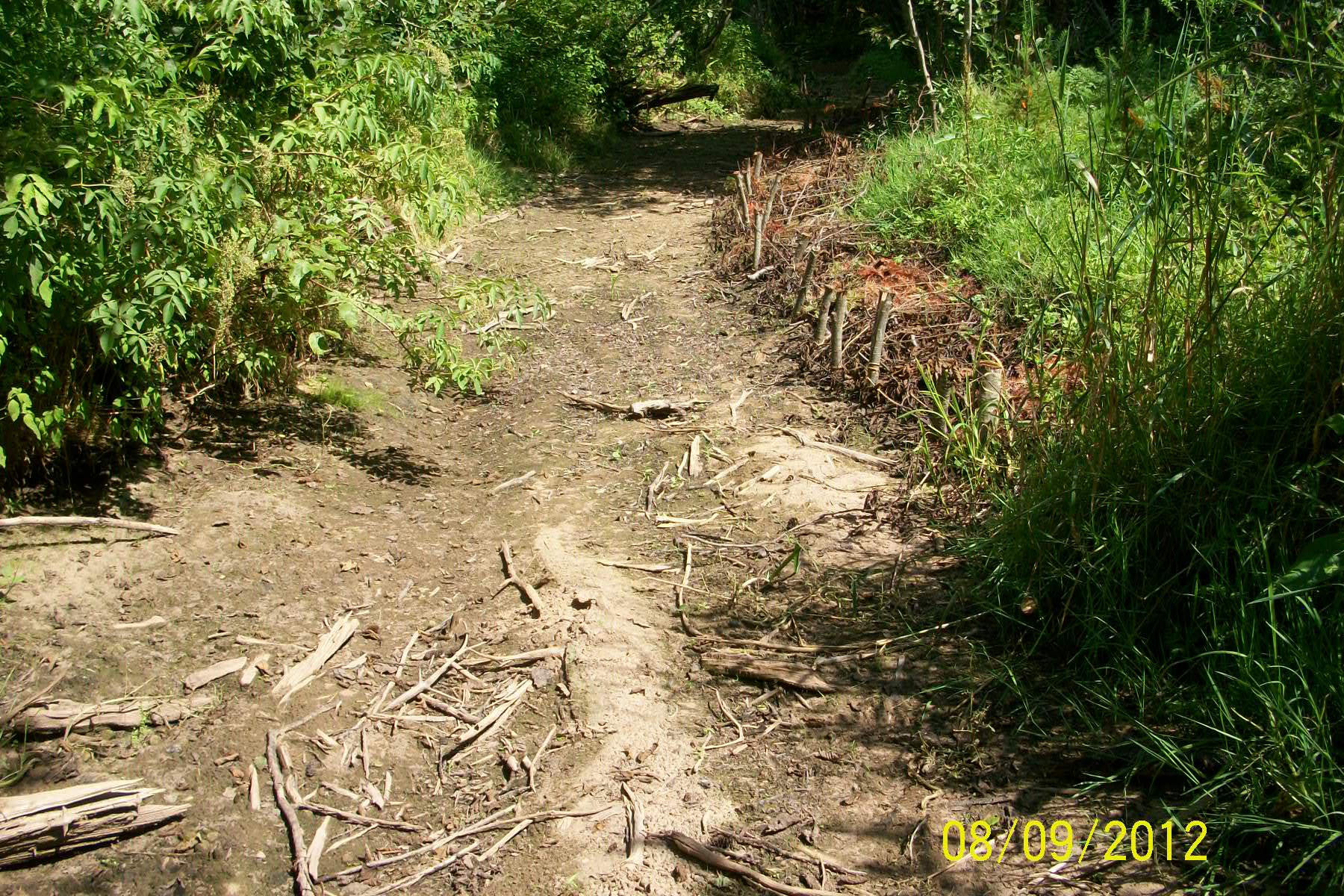
Brackley branch of Winter River completely dried up (Aug. 12th 2012)

Don Mazer started his presentation to the EAC by pointing out that, “It’s appropriate that these consultations begin in Charlottetown, and to be talking about the Winter River, the source of virtually all of the water used by this City and its residents, businesses, institutions, worker and visitors. One could say that the reason for these consultations actually begins with Charlottetown and with the Winter River. The Standing Committee hearings about the impact of high capacity wells and the proposal to lift the moratorium led to the recommendations for a Water Act. And the Winter River watershed is the home of 14 of such high capacity wells located in Brackley, Union and Suffolk that operate all day every day of the year, pumping more than 18 million litres per day from the watershed to the City of Charlottetown. There is much to be learned from the experience of the Winter River with water extraction that is valuable for a new Water Act.”

You can read Don’s full presentation here.