Coalition Makes Second Presentation to the EAC

“We need to be guided by a bold vision for the future, and by a true commitment to sustainability. The key to this vision would be a transformation to sustainable agriculture as part of a sustainable economy. We need to ensure the production of healthy food while:

– restoring and preserving natural resources so that future generations can meet their needs

– improving the quality of the land (by increasing soil organic matter, and by reducing its pesticide and nitrate content)

– withdrawing no resources that cannot be replenished (e.g. fossil fuels)

– protecting the social and economic conditions of our farmers, and the health of our communities.”

Read the whole presentation here

Water Act Consultations Schedule

The Water Act Consultations are winding down – here is the schedule for the next few weeks. In each case start time is 7:00 p.m.

Tuesday, Nov. 24th
Kensington Legion

Kensington North Watersheds Association
Kensington Water Management
Southwest River Nitrate Group
Margaret MacKay (individual)

Thursday, Nov. 26th
Elmsdale, Westisle Composite

Coalition for the Protection of PEI Water (#2)
PEI Federation of Agriculture
PEI Federation of Municipalities
Cascumpec Bay Watershed Association

Wednesday, Dec. 2nd
Cornwall Civic Centre

Cornwall and Area Watershed Group
PEI Potato Board
PEI Shellfishers Association
Ellen’s Creek Protection and Planning Committee

Monday, Dec. 7th
Farm Centre, Charlottetown

CropLife Canada
Fertilizer Canada
Darcie Lanthier (individual)
Sandy MacKay (individual)

Save Our Seas and Shores PEI Presents to EAC

UntitledEllie Reddin and Ian Forgeron, speaking on behalf of SOSS PEI made an excellent presentation with 3 strong recommendations:

Recommendation 1: Protection from the potential pollution of PEI water resulting from oil and gas exploration and drilling in the Gulf, including the discharge of deleterious substances.

Recommendation 2: Protection of fundamental right to clean, safe drinking water, and the protection of the health of aquatic systems as the primary goal of the Water Act.

Recommendation 3: Continuation of moratorium on High Capacity Wells for agricultural irrigation, and non-essential uses; as well as, increased regulations for for industrial and commercial purposes of High Capacity Wells and to phase out existing wells gradually to the extent possible.

Strong Recommendations from Winter River/Tracadie Bay Watershed Group

12002070_915755031830986_3432133490319790371_n

The Winter River/Tracadie Bay Watershed Association made a powerful presentation to the Environmental Advisory Council on November 4th.

One of their recommendations was to investigate methods to return some water to the Winter River to reduce the amount of “one way flow” of water to Charlottetown, at least during dry periods, to help recharge the aquifer. Read more here.


We Don’t Want Another Winter River: Lessons for the Water Act By Don Mazer

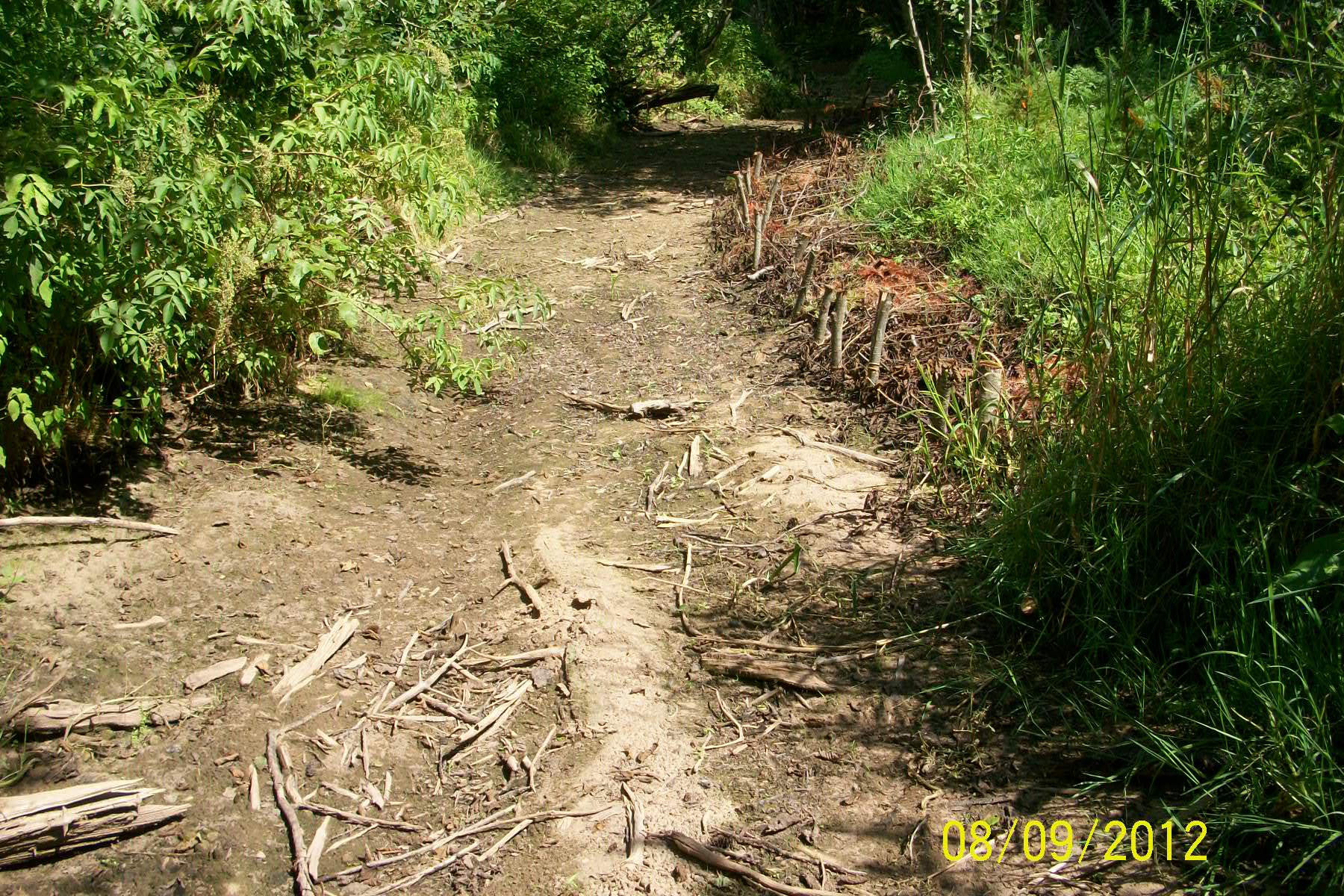
Brackley branch of Winter River completely dried up (Aug. 12th 2012)

Don Mazer started his presentation to the EAC by pointing out that, “It’s appropriate that these consultations begin in Charlottetown, and to be talking about the Winter River, the source of virtually all of the water used by this City and its residents, businesses, institutions, worker and visitors. One could say that the reason for these consultations actually begins with Charlottetown and with the Winter River. The Standing Committee hearings about the impact of high capacity wells and the proposal to lift the moratorium led to the recommendations for a Water Act. And the Winter River watershed is the home of 14 of such high capacity wells located in Brackley, Union and Suffolk that operate all day every day of the year, pumping more than 18 million litres per day from the watershed to the City of Charlottetown. There is much to be learned from the experience of the Winter River with water extraction that is valuable for a new Water Act.”

You can read Don’s full presentation here.

Blue Drinks – October 27

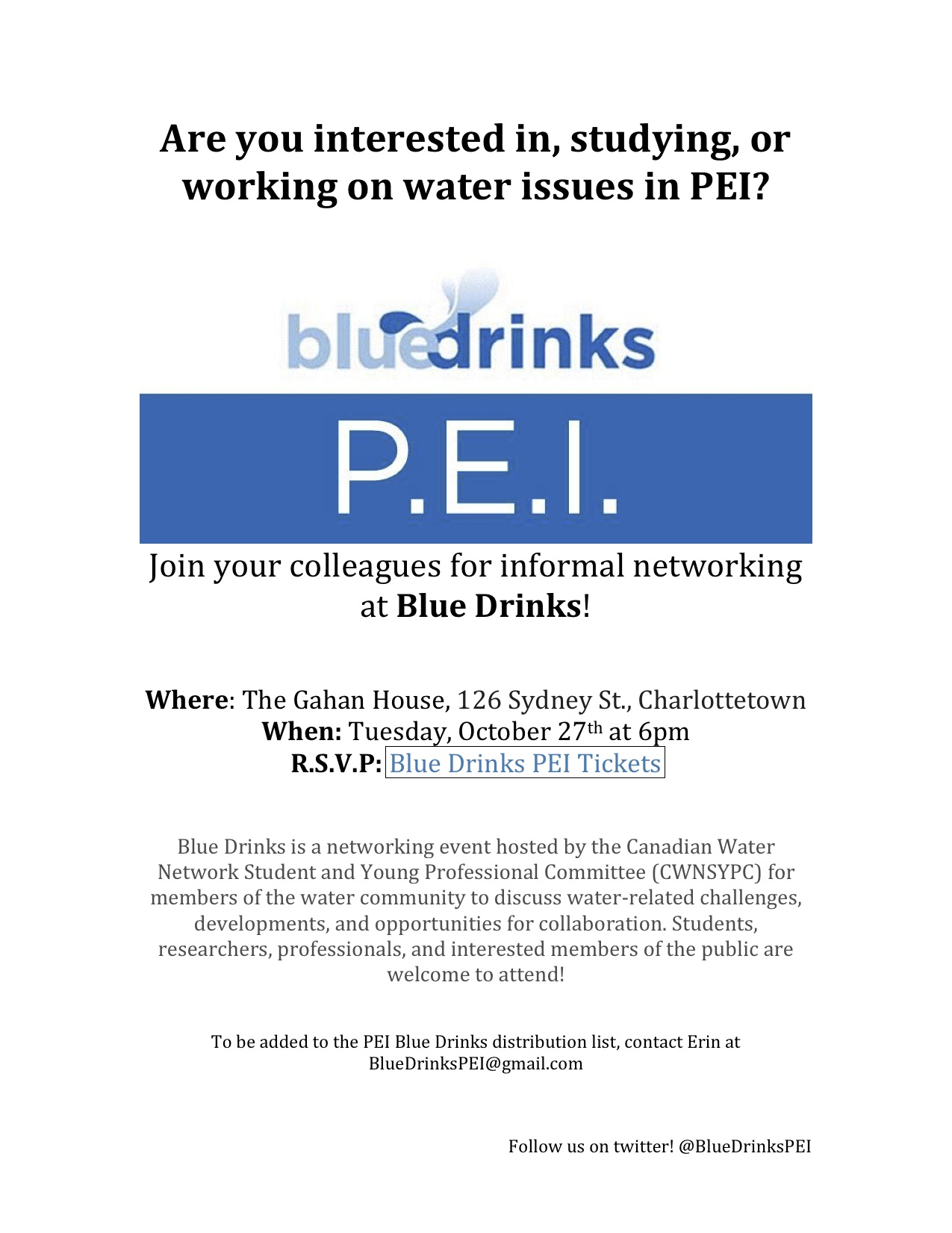
PEI Blue Drinks - October 27

Are you interested in, studying, or working on water issues in PEI? Join your colleagues for informal networking at Blue Drinks! Where: The Gahan House, 126 Sydney St., Charlottetown

When: Tuesday, October 27th at 6pm

R.S.V.P: Blue Drinks PEI Tickets

Blue Drinks is a networking event hosted by the Canadian Water Network Student and Young Professional Committee (CWNSYPC) for members of the water community to discuss water-related challenges, developments, and opportunities for collaboration. Students, researchers, professionals, and interested members of the public are welcome to attend!

To be added to the PEI Blue Drinks distribution list, contact Erin at BlueDrinksPEI@gmail.com

Council of Canadians Water Act Presentation

Leo Broderick presented on behalf of the Council, in Summerside on October 13. He ended his presentation with a hopeful message: “There is hope – and that is illustrated by looking at the bald eagle. The bald eagle took a heavy blow from DDT. A pesticide that enters the food chain and causes reproductive failure. The bald eagle is a great conservation story. PEI now has hundreds.”

396103_518188938213219_347052039_n

You can see Leo’s powerpoint presentation here.


Presentation by Gary Schneider to the EAC

Gary Schneider, Co-Chair of the Environmental Coalition of Prince Edward Island and Past Member of the Round Table on Resource Land Use and Stewardship, presented to the Environmental Advisory Council on October 8th. One of his first recommendations:

“We must face up to the serious environmental problems in this province. This year’s Speech from the Throne stated that one reason people love to come to Prince Edward Island was our “pristine” water. And when I take the Marine Atlantic ferry there is always an announcement about our “pristine” Island waters. Pristine is a lovely word, but when you have dead fish floating in rivers and shellfish dying in our estuaries, attracting national and international attention in a variety of media outlets, you’d have to have a pretty low opinion of visitors’ intelligence to think they would believe that. Studies are being carried out at UPEI to look at the significant amounts of nitrates and pesticides that are flowing into the Strait. We really need to start making the same progress on water that we are finally making on mental health, child abuse, drug addiction or other societal issues. We need to honestly admit there are problems and address them with seriousness and immediacy.”

Read Gary’s full text here.

Cooper Institute Presentation to the Environmental Advisory Committee

On behalf of Cooper Institute, Marie Burge made a presentation to the Environmental Advisory Council on October 13 in Summerside. She recommended the following:

That the Prince Edward Island Environmental Advisory Council (EAC) insist the Government develop a time frame which allows for multi-layered engagement of the community; the PEI Water Act is too important and too essential to the future of PEI to be rushed through.

That the Prince Edward Island EAC engage community members specialized in clear language and ethical principles to develop a preamble to the PEI Water Act which reflects standards and ideals on which the protection of PEI water should be based, such as a common inheritance; a basic human and ecological right; and a public trust.

That the Prince Edward Island EAC be outspoken with, and supportive of, the Minister of the Environment and the Premier in relation to the incredible pressure on the Minister and Premier from influential circles, especially from those who realize that the Act may curtail their interests in some way.

That the Prince Edward Island EAC, aware that elements of the community will continue to think of water as theirs to own and use, even abuse, for their own private or collective gain, must design parts of the Act to address potential violators and redress the violations.

That the Prince Edward Island EAC, ensure that the PEI Water Act place front and center that the protection of PEI water means the protection of the land, air, plants, animals and the people of the province.

Read Cooper Institute’s full submission here.


A New Conversation About Water

IMG_3850by Don Mazer

We need a new conversation about water and about the human relationship with the natural world. And we need a new conversation about the meaningful role for all citizens in determining a sustainable water future.

The development of the Water Act provides us with an opportunity to have this conversation.

In current discussions, as in The White Paper (“A Water Act for Prince Edward Island”), water is often referred to as a “resource“ or “our most precious natural resource”. But this description reflects a problematic attitude toward water and the natural world.

– When water is seen as a resource, its value lies in how we humans can use and exploit it. We become “takers” and “consumers” of water, rather than stewards or guardians. We minimize the intrinsic value of water, and its role in supporting the healthy ecosystems required by all other species.

– “Our” water assumes ownership, and the right to do what we wish with water. But humans have no more claim to water than do the fish or the plants. We are part of a larger community of life that is interdependent with water. We have no special entitlement.

The White Paper reflects another troubling common assumption in our current perspective on the environment. Water is “managed” through a “risk assessment” approach. We come to regard certain levels of risk as acceptable (e.g. nitrate levels) and not as urgent issues requiring immediate solutions.

The risk assessment approach itself reflects a problematic relationship with the environment. The recurrent issues in our waters come from a willingness to accept just such risks: high nitrate levels, anoxic conditions, pesticide contamination, fishkills, dry stream beds. We continuously take unacceptable risks with “our most precious natural resource.”

The new conversation about water and the Water Act begins with a clear goal and purpose. In the White Paper, the goal is: “…to protect the quality and quantity of the island’s water and ensure that our water supply is healthy and sustainable now and into the future.”

We believe the goal of the Water Act should be “to protect and ensure the health of all aquatic ecosystems.” Only healthy ecosystems can provide the quantity and quality of water to support the needs of all human and nonhuman beings for all generations.

Making ecosystem health our priority requires that we adopt the precautionary principle in assessing risk: we have an obligation to protect the environment from harm whenever we can, even if scientific evidence is incomplete.

The Water Act should reflect key shared values. Water is a human and nonhuman right, part of the right to a healthy environment. Water is a common good and a public trust. No one owns water and we are all its guardians.

Ongoing citizen involvement in a transparent and informed process is essential in this new conversation, continuing well beyond the defined consultations into the development and implementation of the Water Act.

The Water Act is an opportunity to forge a different relationship with water and the natural world grounded in respect for what is truly precious to us. Our sustainable water future requires conservation, where we use only what we need rather than all that we want. We must be caretakers of water, and demand a Water Act that ensures the ongoing health of all aquatic ecosystems.